 NURSINGNOTESINSTITUTIONAL
FREE 30-DAY COHORT PILOT
Prove measurable learning lift in 30 days—without replacing your curriculum.
NursingNotes identifies where students struggle, delivers targeted multimodal remediation, verifies retention in fresh clinical scenarios, and shows faculty exactly what changed from baseline to post-test.
Request a free cohort pilotExplore the school platform demoPreview the faculty reportFaculty Admin Sign In
Returning school administrators: use the same work email used to register or join the school workspace.
Works alongside existing prepTwo focused pilot tracksMatched pre/post evidence
EXAMPLE REPORT · ILLUSTRATIVE DATA+18.2pts
What your faculty report is designed to measure
Baseline 61.4%
Post 79.6%
82%Recall held
89%Completion
Example only—not a live performance claim
THE MISSING SIGNAL
Practice completion does not prove retention.
Students can recognize an answer immediately after studying and still fail to retrieve the same concept later. NursingNotes separates remediation, independent practice, delayed retrieval, and formal assessment so faculty can see whether learning actually held.
A COMPLEMENTARY LEARNING LAYER
Keep the curriculum and platforms you already use.
NursingNotes is designed to work alongside your existing curriculum, LMS, ATI, HESI, and other NCLEX-prep resources. It adds a focused retention-and-remediation loop without asking faculty to rebuild the course.
ALREADY USING ATI OR HESI?
Keep the assessment. Add proof that remediation held.
Your existing assessment can identify where to look. NursingNotes preserves that result in its original scale, checks the reported weakness with fresh QuizRx evidence, guides targeted recovery, and verifies whether the correction survives later retrieval.
Protect the investment you are already making in standardized assessment. Add an independent recovery layer instead of forcing an all-or-nothing platform replacement.
- 01ATI / HESI RESULTPreserve the original scoreNo recalculation or competing pass-probability claim.
- 02FRESH VERIFICATIONSee whether the gap reproducesIndependent questions test the same concept in a changed scenario.
- 03TARGETED RECOVERYDiagnose why, then remediateSeparate knowledge, cue recognition, priority, safety, and retrieval problems.
- 04RECALL PROOFProve whether the correction heldCheck again at 24–72 hours and reinforce at 7–14 days.
Original vendor score and scaleVisible source record—never silently converted
Reported content and reasoning gapsFresh, different-family verification
Recommended review or remediationGap-specific multimodal recovery path
Performance at the assessment momentDelayed retrieval and transfer evidence
Where faculty should lookWhether the weakness remains and what to do next
IMPORTANT BOUNDARY
NursingNotes does not challenge, reverse-engineer, or recalculate ATI or HESI scores. It produces separate evidence from fresh QuizRx activity and reports the limits of that evidence.
Preview the recovery workspaceSEE THE RETENTION GAP
Why capable nursing students can still struggle under NCLEX conditions
The problem is often not exposure. It is whether students can retrieve and apply the right concept later, independently, inside a new clinical scenario. This short overview shows why NursingNotes measures more than completion.
Active retrieval—not passive familiarityFresh-scenario checks after learningFaculty-visible evidence of change
Watch directly on YouTube →QUIZRX 2.0 · RECALL-VERIFIED READINESS
A correct answer is a moment. Readiness is what still works later.
Most question banks report what a student got right while the material was fresh. QuizRx 2.0 asks a harder—and more useful—question: Can the student retrieve, reason, and perform when the question changes and the answer is no longer familiar?
ILLUSTRATIVE LEARNER PROFILE74/100STRENGTHENINGFive independent evidence signals
THE FIVE-FACTOR FORMULA
One score. Five kinds of proof.
No single quiz average is allowed to masquerade as readiness. The signal combines distinct performance dimensions from the learner's most recent 90 days.
Blueprint Mastery itself is 65% measured domain performance and 35% breadth of coverage. Repeated high-risk misses can force a “Needs Attention” status even when the overall average looks acceptable.
THE RECALL-TO-PROOF™ PHILOSOPHY
Learning is not counted as proof until it survives retrieval.
A missed concept begins a deliberate evidence loop. QuizRx teaches the gap, changes the scenario, waits beyond the immediate review window, and then checks whether the learner can independently retrieve the principle.
- 01Gap detectedA scored response reveals a knowledge, safety, cue-recognition, priority, or reasoning error.
- 02Targeted remediationThe learner receives a focused rationale, memory cue, and next action tied to the actual miss.
- 03Fresh-family retestThe same concept returns in a different clinical scenario—not as a memorized repeat.
- 04Delayed Recall ProofA check at 24–48 hours, followed by reinforcement about a week later, tests whether the correction held.
WHY THE SIGNAL IS HARDER TO GAME
QuizRx protects the meaning of “readiness.”
Tutor Mode can help a student learn, but it cannot inflate the readiness signal. Opening a rationale, replaying content, or answering a familiar question is not qualifying evidence.
Immediate correctnessIndependent fresh-question performance
Repeat questions may raise the averagePreviously seen question families are excluded from fresh evidence
Review activity can look like masteryLearning activity and scored evidence remain separate
One blended percentageFive visible dimensions reveal the actual bottleneck
Practice ends after the rationaleMiss → remediate → fresh retest → delayed proof
For the 30-day institutional pilot
Faculty also receive a separate Pilot Learning Progress Score: 30% assessment, 25% independent practice, 20% delayed recall, 15% clinical reasoning, and 10% study consistency. It measures observed learning progress inside the pilot—not the probability of passing the NCLEX.
THE RECALL-TO-PROOF™ LEARNING LOOP
Five steps from an identified gap to measurable change
Find the gap
A required baseline and ongoing answers reveal the concepts and reasoning patterns needing attention.
Deliver the right support
A bank-grounded learning plan focuses the lesson, memory cue, and next action on the identified need.
Apply independently
Students use scored Test Mode to show what they can answer without explanations in front of them.
Prove it later
Fresh scenarios check whether the concept can still be retrieved after the immediate study window.
Show the lift
A parallel post-test matches the blueprint and difficulty without repeating the baseline questions.
TWO FOCUSED TRACKS
Narrow enough to measure. Important enough to matter.
Pharmacology Safety Application
Medication rights, IV and parenteral safety, interactions, adverse effects, client teaching, and calculation safeguards.
- 500 original questions
- 1,000 fresh scenario variants
- Balanced 20-item pre/post forms
Fluids, Electrolytes & Acid-Base
Volume status, potassium, calcium, magnesium, acid-base interpretation, IV fluid safety, and urgent priorities.
- 500 original questions
- 1,000 fresh scenario variants
- Balanced 20-item pre/post forms
ACTIONABLE FOR FACULTY
See where support can make the greatest difference.
The reporting experience is designed to move beyond usage totals. It helps faculty see the learning pattern and decide where targeted support is most needed.
See the example faculty view →FROM ALERT TO MEASURED RECOVERY
We do more than flag a struggling student.
QuizRx can identify early warning signals, help faculty prescribe a recovery pathway, pair targeted students with a physical RecallBand intervention, and measure what happened afterward.
5 complimentary bands in a 30-day pilot10 included for targeted paid-cohort intervention
Important evidence rule: RecallBand supports audio-first study habits and found-time learning. Listening never raises the QuizRx readiness signal by itself; the student must still demonstrate retrieval through qualifying independent practice and Recall Proof.
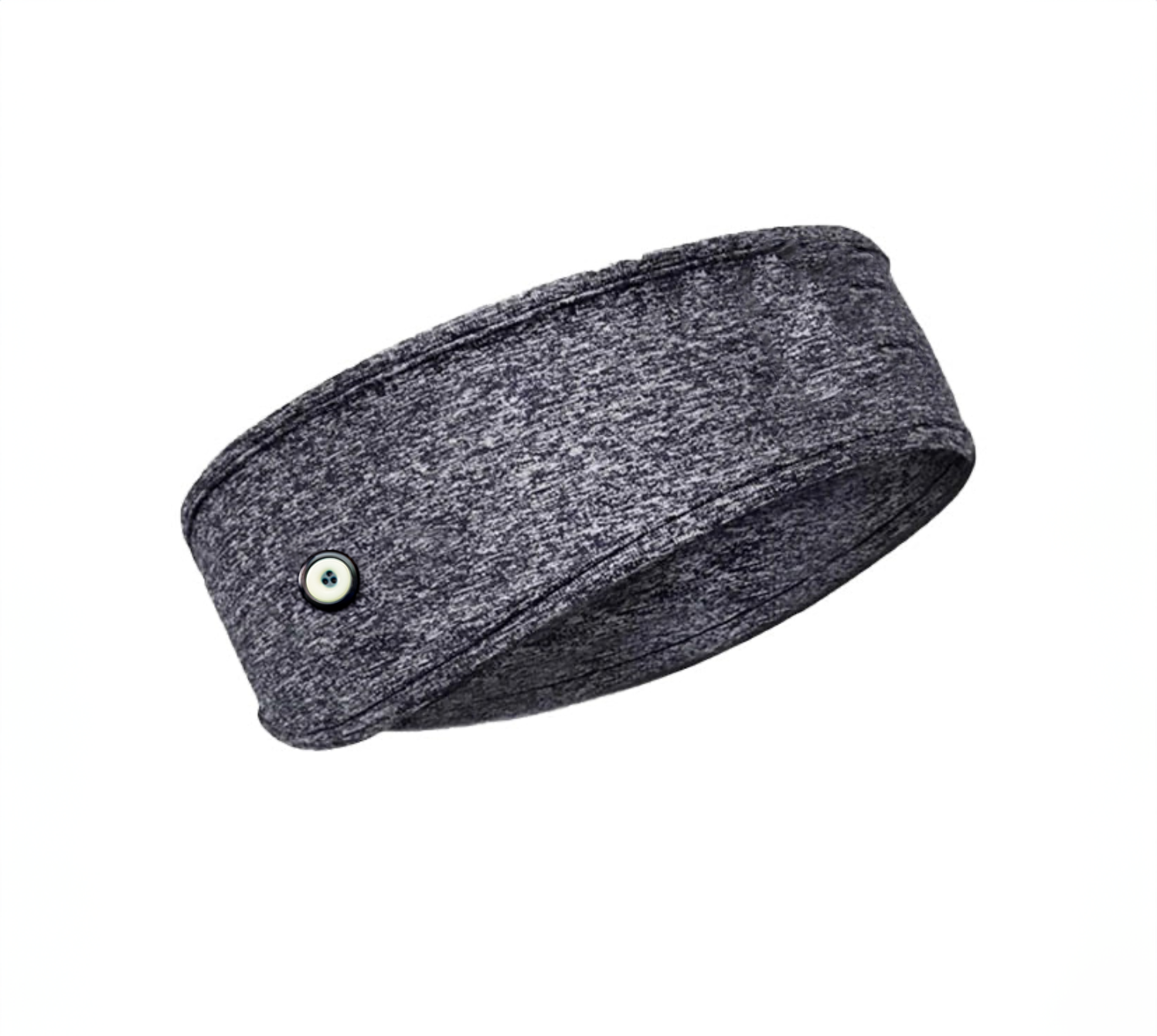 RECALLBAND™Audio-first reinforcement for targeted recovery
- 01Identify riskTwo early signals—or one urgent indicator
- 02Faculty intervenesConfirm need and issue RecallBand
- 03Prescribe found-time audioTargeted Recall Albums or ConceptCast
- 04Require retrieval proofIndependent QuizRx practice + Recall Proof
- 05Measure recoveryReview evidence seven days after assignment
MULTIMODAL RETRIEVAL REINFORCEMENT
Use the right format for the gap—not one more generic review.
The bank-grounded AI Learning Coach keeps the recommendation tied to the student's selected pilot track and approved question rationale. Students can then reinforce the concept through the format that helps it stick.
AIFocused lesson♫Audio retrieval cues◆Mnemonics▷Video Mentor▱Flash retrieval✓Scored practice
WHAT THE SCHOOL RECEIVES
One focused cohort pilot. A complete learning-change story.
NEW · NURSING PROGRAM INTELLIGENCE
Know where your program is vulnerable—and whether graduates are becoming practice-ready.
Nursing programs often manage student outcomes, clinical evaluations, employer feedback, faculty capacity, regulatory deadlines, and improvement plans in separate places. Program Intelligence brings those signals together, shows what deserves attention, and documents what the program did next.
Close the gap between graduation and practice.
Compare academic, clinical, simulation, graduate, preceptor, and employer evidence across the same competency domains.
- Practice-partner and preceptor feedback
- Cohort competency profiles
- Academic and direct clinical evidence kept distinct
- Graduate and employer follow-up
- Source-grounded gap analysis
- Improvement and reassessment tracking
See the warning signs before they become findings.
Monitor outcomes, faculty and leadership stability, clinical capacity, complaints, deadlines, public-reporting consistency, and unresolved actions.
- Transparent program-risk signals
- State-board and accreditation deadline tracking
- Faculty and leadership stability
- Clinical capacity monitoring
- Complaint and partner-concern trends
- Annual-report preparation workspace
EVERY SIGNAL MUST LEAD SOMEWHERE
Detect → Investigate → Assign → Act → Reassess → Document
Turn findings into owned, time-bound actions with a defined success measure, follow-up evidence, and an effectiveness decision.
Decision support without false certainty.
Every signal shows its source, threshold, date, owner, and interpretation limits. NursingNotes does not determine accreditation, state-board compliance, licensure eligibility, or whether an individual graduate is safe for independent practice.
DEFENSIBLE LEARNING EVIDENCE
Measure focused learning change—not a manufactured pass-rate promise.
Faculty see baseline-to-post point lift, topic change, participation, and delayed-recall performance. Results describe observed change within the selected pilot track; they are not presented as an individual NCLEX pass prediction.
Preview exactly what faculty will see →01Matched baseline and parallel post-test02Scored practice separated from remediation03Delayed retrieval in fresh scenarios04Transparent point-lift reporting
PREMIUM FIRST-YEAR PARTNER BENEFIT
More than a platform rollout. A launch your program can use, display, and put to work.
Qualifying new $5,000+ institutional partners receive the NursingNotes Institutional Launch Experience™: faculty onboarding paired with a ready-to-use program marketing library and an optional student portrait experience with measurable give-back potential.

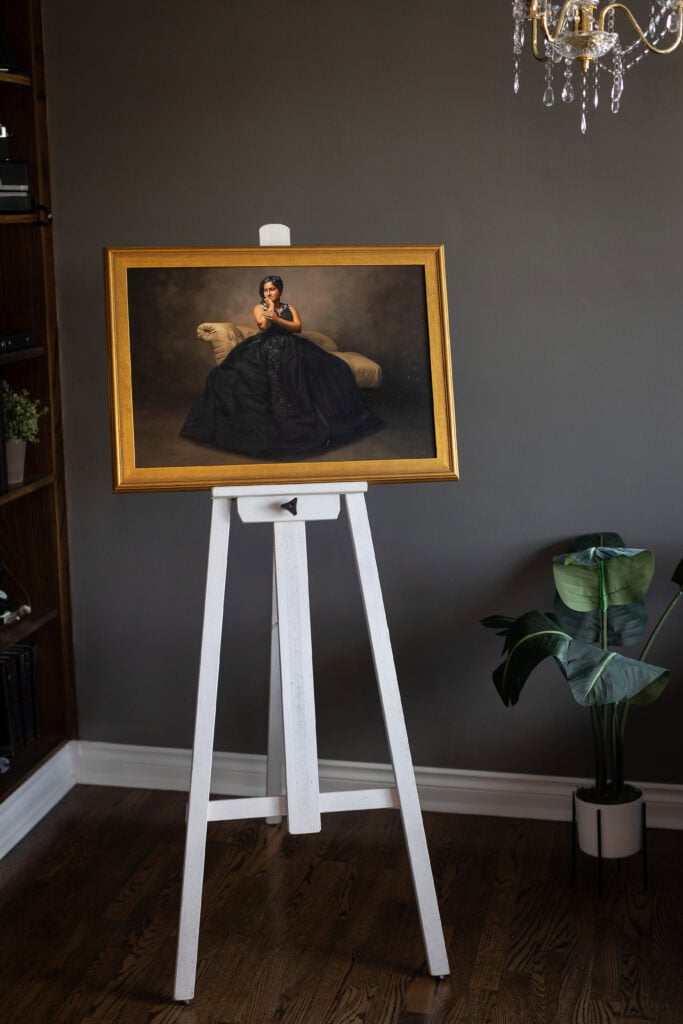
Representative DNA Premium Portraits portfolio work. Subjects shown are not NursingNotes institutional participants.
Nursing Leadership Brand Experience™A reusable program marketing asset library for recruitment, website, social, annual-report, faculty-recognition, and stakeholder communications.
Nursing Legacy Portrait™A finished fine-art painted wall portrait created as an institutional School of Nursing asset.
RN Era Give-Back Eligibility & Revenue Potential20 completed sessions would direct $1,000 to an approved program fund; 40 would direct $2,000.
Available to qualifying new institutional partnerships of $5,000+; scheduling, travel allowance, image licensing, school approvals, and RN Era participation minimums apply.
PROGRAM ROI CALCULATOR
Model the economics with your numbers—not ours.
Estimate the financial value of a modest first-time pass-rate improvement against current institutional pricing. Change every assumption and use the break-even result to pressure-test the decision.
Lower-cost confirmed model applied automatically$99 per student for 120 days, or $5,000 for a 120-day cohort of up to 60 students. Cohorts above 60 are modeled per seat until custom pricing is confirmed.
PLANNING ESTIMATE
$5,000 120-day cohort licenseESTIMATED NET VALUE+$4,000+80% modeled ROI after estimated license cost
Break-even improvement2.8 percentage points
This is a planning model—not a promise of pass-rate improvement or guaranteed savings. It assumes each additional first-time pass avoids one remediation cycle. Use your program's documented costs and conservative lift assumptions; final pricing and scope are confirmed in writing.
START WITH PROOF OR DEPLOY NOW
One school workspace. Three clear ways to begin.
The pilot, per-seat purchase, and cohort license all open the same administrative system—so schools do not lose data or rebuild cohorts when they move forward.
Free 30-day pilot
$0For schools that want to evaluate learning lift, faculty reporting, and nursing program intelligence before procurement.
- 25 student seats
- Up to 5 targeted RecallBand interventions
- School admin dashboard
- Live Program Intelligence workspace
- Pre/post and outcomes evidence exports
- No payment method required
Per-student access
$99 / studentFor targeted remediation groups, individual courses, or schools that want exact seat control.
- 120 days from student activation
- Select quantity at secure checkout
- Central student and seat management
- Faculty-saved ROI assumptions
- One-time purchase—no auto-renewal
$5,000 Institutional License
$5,000 / 120 daysFull cohort access, nursing program intelligence, and a qualifying first-year Institutional Launch Experience.
- 120-day institutional term
- 60 student seats included
- QuizRx 2.0, Recall Proof, and at-risk analytics
- 1,800 pooled Music Rationale generations
- Up to 10 targeted RecallBand interventions
- PracticeReady, Partner Pulse, and ProgramWatch
- Program Health and Improvement Actions
- Outcomes, continuous-improvement reports, evidence exports, and documentation
- Up to 20 professionally retouched program-marketing images plus leadership and team portraits for qualifying new partners
- Nursing Legacy Portrait™ and optional RN Era Give-Back potential of $50 per completed student session
QUALIFYING NEW $5,000+ PARTNERSHIP
See deliverables and eligibilityThe launch benefit is included—not added as another software fee.
Year one includes the Institutional Launch Experience. With each qualifying yearly renewal, active partners receive a non-cash $600 NursingNotes Partner Visual Credit plus preferred DNA Premium Portraits institutional pricing.
Paid plans are one-time charges and do not automatically renew. Automated sales-tax collection is off until NursingNotes confirms its applicable registrations.
READY FOR ACADEMIC REVIEW
Useful to students. Defensible to faculty. Easier to evaluate institutionally.
The strongest school implementation is not another isolated student app. It is a focused intervention with defined measures, low faculty burden, and exports that leadership can actually use.
Discuss a school pilotAccreditation-supporting evidence
- Pre/post summary
- Engagement summary
- NGN step coverage map
- Faculty narrative template
Implementation and security
- Aggregate cohort analytics
- No PHI required
- Encryption in transit and at rest
- Keyboard-accessible student workflows
Low faculty workload
- Guided 30-day learning sequence
- Automated practice and retrieval checks
- Clear cohort-level reporting
- No curriculum replacement required
OUTCOMES & CONTINUOUS IMPROVEMENT EVIDENCE
Turn pilot activity into evidence faculty can actually use.
At the end of the pilot, the reporting package organizes the intervention, participation, measured learning change, and limits of interpretation into practical formats for leadership, program review, and continuous-improvement documentation.
Preview the underlying faculty report →PDF01
Pre/Post Summary
Matched baseline and parallel post-test results, point lift, topic-level change, cohort completion, and clear measurement notes.
- Aggregate cohort results
- Baseline-to-post comparison
- Scope and interpretation limits
CSV + PDF02
Engagement Summary
Participation, active study days, independent practice dose, delayed checks, and completion patterns in analysis-ready and presentation-ready formats.
- Participation and completion
- Practice and retrieval activity
- Cohort-level engagement trends
PDF03
NGN Step Coverage Map
Observed practice distribution and performance across the six Clinical Judgment Measurement Model steps.
- CJMM step coverage
- Reasoning-pattern strengths and gaps
- Priority opportunities for reinforcement
DOCX04
Faculty Narrative Template
An editable framework for documenting the intervention, evidence reviewed, observed change, limitations, and planned next steps.
- Ready-to-edit narrative structure
- Evidence and limitation prompts
- Continuous-improvement next steps
▤
ONE-PAGE LEADERSHIP SUMMARYA concise view for deans, committees, and program-review conversations.
Start a free pilotSummarizes the pilot question, cohort, intervention, participation, measured change, limitations, and recommended next action without requiring reviewers to interpret raw dashboard data.
Important: The packet supports documentation and continuous-improvement review. It does not independently establish accreditation compliance, prove causation, or predict an individual student's NCLEX outcome.
FREQUENTLY ASKED QUESTIONS
The questions a careful nursing program should ask.
QuizRx 2.0 is not positioned as a magical pass-rate fix. It is a focused retention, remediation, and evidence layer with defined inputs, visible limitations, and measurable outputs.
Start a free pilotHow does this address forgetting instead of just adding more content?+
QuizRx 2.0 uses active retrieval, targeted remediation, and delayed different-family checks. A student does not merely reread the missed concept; the system asks the student to retrieve and apply it later in a changed clinical scenario. That is the purpose of Recall Proof™.
Do faculty have to grade assignments or manage every student's remediation?+
No routine grading is required. The pilot guides students through baseline measurement, targeted learning, independent practice, delayed checks, and post-testing. Faculty receive aggregate participation, topic, recall, reasoning, and learning-change signals for review.
What does the readiness score actually mean?+
It is a recall-verified practice-readiness signal built from fresh-question performance, delayed recall, clinical judgment, simulation stability, and blueprint mastery. It is not an NCLEX pass probability. The score remains hidden until minimum evidence exists, and its confidence increases only as breadth, volume, and time increase.
What activity is excluded from qualifying readiness evidence?+
Tutor Mode, opening a rationale, watching a video, listening to audio, using chat, and repeating a familiar question family do not raise the readiness signal. Those tools may support learning, but QuizRx keeps learning activity separate from independent scored evidence.
We already use ATI or HESI. Why would we add NursingNotes?+
Because the decision is not all-or-nothing. Keep the standardized assessment you trust. NursingNotes preserves its reported score and focus areas, checks whether the weakness reproduces on fresh questions, guides targeted recovery, and verifies whether the correction held later. The purpose is to make the school's existing assessment intelligence more actionable—not to relabel or dispute it.
Does NursingNotes replace or recalculate ATI/HESI scores?+
No. ATI and HESI results remain visible in their original vendor scale. NursingNotes generates a separate fresh-verification and delayed-recall evidence trail. It does not convert an ATI percentage into a HESI score, recalculate a vendor pass probability, or claim that a short check confirms NCLEX success.
Can faculty bring existing ATI/HESI results into the dashboard?+
Yes. The Assessment Recovery workspace records the source assessment, original result, reported focus areas, cohort, and verification track, then follows the recovery plan through fresh verification, remediation, Recall Proof, and evidence review. Direct vendor-file automation should be validated against the school's actual export format before it is promised; the current workflow does not require a proprietary integration.
We already use an LMS or another NCLEX-preparation platform. Does this replace it?+
No. NursingNotes is designed to sit alongside the curriculum, LMS, ATI, HESI, and other preparation resources. The differentiated use case is the retention-and-proof layer: targeted multimodal reinforcement, delayed retrieval, and evidence that shows whether remediation held.
Why add this if our current platform already has practice questions?+
The distinction is not simply the number of questions. Conventional averages can be inflated by immediate feedback, familiar items, and repeated recognition. QuizRx separates Tutor Mode from Test Mode, excludes seen families from fresh evidence, measures clinical judgment separately, and requires delayed retrieval before a corrected concept counts as held.
How long does institutional access last?+
Per-student access lasts 120 days from activation. The $5,000 cohort license provides up to 60 seats and 1,800 pooled Music Rationale generations for one 120-day contract term.
Are SSO and larger-program implementation options available?+
SSO using SAML or OIDC can be scoped for larger deployments, including just-in-time provisioning and role or group mapping. CSV bulk import is supported; any LMS or LTI work should be confirmed in the implementation scope rather than assumed.
What happens during the 30-day pilot?+
Students complete a blueprint-balanced baseline, receive targeted remediation and independent practice, complete delayed learning checks, and then take a parallel post-test after the required study dose. Faculty receive aggregate reporting and the end-of-pilot documentation package. The results describe change within the selected pilot track—not a guaranteed change in NCLEX outcomes.
How does the RecallBand intervention work?+
The school receives an intervention pool—not a first-come giveaway. Faculty can issue a RecallBand when the dashboard detects two early warning signals or one urgent indicator, or when faculty concern warrants nomination. The student then follows an audio-first Recovery Path and completes independent QuizRx and Recall Proof work. Listening itself does not raise readiness; faculty review the student's demonstrated retrieval evidence after the intervention.
Does the pilot require patient data or PHI?+
No patient diagnoses, charts, or clinical records are required. The platform evaluates student learning activity and assessment responses. Institution-specific privacy, security, and data-handling requirements should still be reviewed before launch.
START WITH PROOF
Run the pilot before making a larger commitment.
Give students a focused learning experience and give faculty a defensible view of what changed—without replacing what already works.
Student pilot sign-in →